The Fed Just Raised Rates: What It Means for Your Money
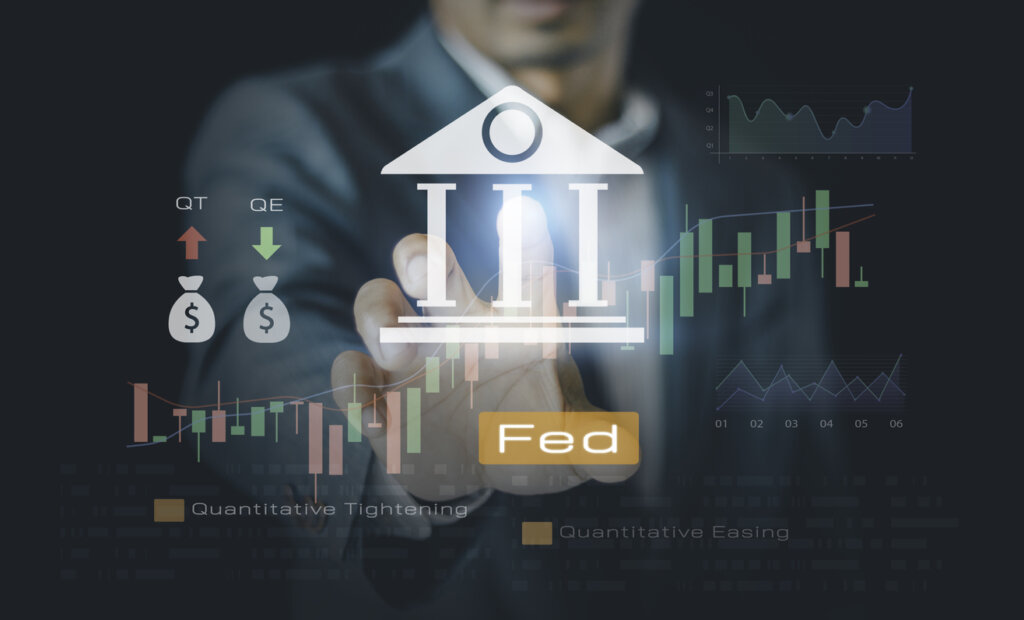
When the Federal Reserve raises interest rates, the change can affect far more than a headline on the evening news. It can influence what you pay to carry a credit-card balance, finance a car, buy a home, refinance a loan, earn on savings, and the value of your investment portfolio.
The basic trade-off is straightforward. Higher rates tend to reward savers and penalize borrowers. But the actual effects differ sharply depending on the kind of debt you have, how much cash you keep, your investment time horizon, and whether the rate increase slows inflation as intended.
Key Takeaways
- The Fed doesn’t set your rates directly. It sets the federal funds rate, the overnight rate banks charge each other. Consumer rates follow, but at different speeds by product.
- Borrowers feel it first. Credit-card APRs are usually variable and can rise within one or two billing cycles. New auto and personal loans get more expensive.
- Fixed-rate mortgages don’t change. If you already have one, a Fed hike doesn’t raise your principal-and-interest payment. ARMs and HELOCs can reset upward.
- Savers may benefit gradually. Money-market funds, T-bills, CDs, and high-yield savings often pay more. What matters is the real return after inflation and taxes.
- Bond prices fall when rates rise — but that isn’t a permanent loss. Longer-duration bonds swing more, and funds can reinvest at higher yields over time.
- Stocks are less predictable. Higher rates can pressure valuations, but markets price in expectations, so a hike doesn’t automatically mean a decline.
- The right response depends on your balance sheet. A retiree, a first-time homebuyer, and a long-term investor experience the same Fed decision very differently.
The Federal Funds Rate
The Federal Reserve does not directly set the rate on your mortgage, credit card, savings account, or auto loan. Its principal policy lever is the federal funds rate, which is the overnight interest rate banks charge one another for certain short-term lending. When the Fed lifts its target range, borrowing conditions generally tighten throughout the financial system. Banks and lenders commonly respond by raising many consumer and business borrowing rates, although the speed and size of those changes vary by product.
The Fed typically raises rates when it believes inflation is too high or demand in the economy is running ahead of available supply. Higher borrowing costs can discourage some spending and investment, reducing demand for homes, cars, inventory, expansion projects, and other credit-sensitive purchases. The goal is not to make life harder for households. It is to slow inflation and support longer-run price stability.
That distinction matters. A rate hike may initially feel like bad news, particularly if you carry debt, but persistent inflation also erodes purchasing power. If inflation falls over time, each dollar of income and savings can retain more of its value.
Impact on Credit Cards
Credit-card annual percentage rates (APRs) are usually variable. If you carry a balance, a Fed increase can raise the APR on new and existing balances, often within one or two billing cycles.
For example, a 0.25-percentage-point rate hike may not sound dramatic. But on a $10,000 revolving balance, repeated increases compound the cost of carrying that debt, especially when the borrower makes only the minimum payment. A higher rate means more of each payment goes toward interest and less reduces principal, extending the repayment period.
Impact on Auto Loans and Personal Loans
New fixed-rate auto loans and personal loans generally become more expensive as market rates rise, though the pass-through may not be immediate or identical across lenders. A higher interest rate increases the monthly payment for a given loan amount, or it reduces the amount a borrower can afford while maintaining the same payment.
A higher-rate environment also makes dealer incentives, loan terms, and down payments more consequential. Extending a loan term may lower the payment, but it can increase total interest expense and leave the borrower owing more than the vehicle is worth for longer.
Impact on Mortgages and Home Equity Borrowing
Mortgage rates are more complicated. They do not move one-for-one with the federal funds rate because longer-term mortgage rates are influenced heavily by Treasury yields, inflation expectations, mortgage-market conditions, and investor demand. Still, Fed policy affects the broader rate environment and can shape mortgage affordability.
For prospective homebuyers, a higher mortgage rate can reduce purchasing power. The same monthly principal-and-interest payment supports a smaller loan amount when the rate rises. This can change not only whether a buyer qualifies, but also which homes fall within budget.
Homeowners with an existing fixed-rate mortgage are generally insulated from future Fed hikes on that loan. Their principal-and-interest payment does not change simply because the Fed raises rates. That is one reason it is important not to assume every homeowner is affected the same way.
The situation is different for borrowers with adjustable-rate mortgages (ARMs), home-equity lines of credit (HELOCs), or other floating-rate home debt. Those rates can reset upward, increasing required payments. Anyone using a HELOC for a renovation, education expense, emergency reserve, or debt consolidation should understand the rate structure, the payment-reset schedule, and how the household budget would handle a higher required payment.
Impact on Savings Accounts and CDs
Higher rates can create a better environment for cash savings. Money-market funds, Treasury bills, certificates of deposit, and high-yield savings accounts often offer more attractive yields when short-term rates rise.
Many traditional checking and savings accounts pay very little interest even when the Fed’s policy rate is elevated. That means it is worth periodically reviewing where emergency reserves and near-term cash are held.
Higher cash yields are helpful, but they do not eliminate inflation risk. What matters is the real return, which is the return after inflation and taxes. A 4% yield is less valuable if prices are rising rapidly, and interest income in taxable accounts may create a tax bill. The right cash strategy balances safety, liquidity, yield, and taxes.
Impact on Bonds
Interest rate increases are particularly important for bond investors. Bond prices and market interest rates generally move in opposite directions: when market rates rise, the price of an existing fixed-rate bond usually falls.
Why? Imagine owning an older bond that pays 3% interest. If newly issued bonds now pay 5%, investors may only be willing to buy the older 3% bond at a discount. Its price falls until its expected return is competitive with prevailing market yields.
This does not necessarily mean a bond investor has “lost money” in a permanent sense. If an investor owns an individual high-quality bond and holds it to maturity, the issuer generally returns the bond’s face value at maturity, assuming no default. But the market value can fluctuate substantially before then, and a sale before maturity may realize a gain or loss.
Why Bond Duration Matters When Rates Rise
The sensitivity of a bond or bond fund to changing rates is often described by duration. In general, shorter-duration bonds tend to be less sensitive to rate increases, whereas longer-duration bonds tend to experience larger price swings when rates change. Lower-coupon bonds and longer maturities can be especially rate-sensitive. Credit risk remains separate from interest-rate risk. A bond can decline because rates rise, the issuer’s credit quality worsens, or both.
For diversified bond funds, rising rates may cause the net asset value to decline in the short run. But over time, the fund may reinvest maturing bonds and incoming cash flows at higher yields. For long-term investors, that higher future income can partially offset the initial price decline. The outcome depends on duration, fees, credit quality, investor time horizon, and the path of future rates.
The lesson is not that bonds are “bad” when rates rise. Bonds can still provide income, diversification, and a potential buffer during equity-market stress. Rather, investors should understand what role their bond allocation is designed to play and avoid making sweeping changes based solely on a single Fed announcement.
Impact on Stocks
The effect of rate hikes on stocks is less direct and less predictable than the effect on short-term borrowing costs. Higher rates can pressure stock valuations because future corporate earnings are discounted at a higher rate. They can also raise companies’ borrowing costs and slow consumer and business spending.
However, a rate hike does not automatically cause stocks to fall. Markets are forward-looking. Investors respond not just to the change itself, but to what was expected, what the Fed says about future policy, how inflation is behaving, whether corporate earnings are resilient, and whether the economy appears headed for a slowdown or a soft landing.
The Bottom Line
When the Fed raises rates, borrowers usually feel the impact first through more expensive credit, while savers may gradually benefit from higher yields. Bond prices can decline in the near term as rates rise, and stock markets may become more volatile as investors reassess growth, inflation, and corporate profits.
The right response depends on your personal balance sheet. A retiree living on fixed income, a first-time homebuyer, a family carrying card debt, and a long-term investor with a diversified portfolio can all experience the same Fed decision very differently.
The most useful question is not, “What will the Fed do next?” It is, “Is my financial plan prepared if rates remain higher than I expected?” A well-designed plan, one that manages costly debt, maintains sufficient liquidity, matches investments to time horizon, and keeps long-term goals in view, can make rate changes far less disruptive.
Insight Wealth Strategies, LLC is a Registered Investment Adviser. Advisory services are only offered to clients or prospective clients where Insight Wealth Strategies, LLC and its representatives are properly licensed or exempt from licensure. Past performance is no guarantee of future returns. Investing involves risk and possible loss of principal capital. No advice may be rendered by Insight Wealth Strategies, LLC unless a client service agreement is in place.
Insight Wealth Strategies, LLC (IWS) and its affiliates do not provide tax, legal or accounting advice. This material has been prepared for informational purposes only, and is not intended to provide, and should not be relied on for, tax, legal or accounting advice. You should consult your own tax, legal and accounting advisors before engaging in any transaction.
Certified Financial Planner Board of Standards Inc. owns the certification marks CFP®, CERTIFIED FINANCIAL PLANNER™, in the U.S., which it awards to individuals who successfully complete CFP Board’s initial and ongoing certification requirements.
Reviewed by,
Tim Raftis, CFP®
Lead AdvisorRelated Blogs
The One Big Beautiful Bill Act: 2027 Tax Planning Priorities for You

Smart Wealth Growth Strategies for Executives in a Shifting Market

How to Overcome Your Financial Fears About Retirement

Asset Allocation in Retirement: Building the Right Strategy

Stay informed with our latest insights on
wealth management for pre-retirees.
Subscription Form
Ready to plan your retirement transition?
The decisions you make in the next few years will determine your retirement lifestyle. Let’s create a plan that gives you confidence in your financial future.